
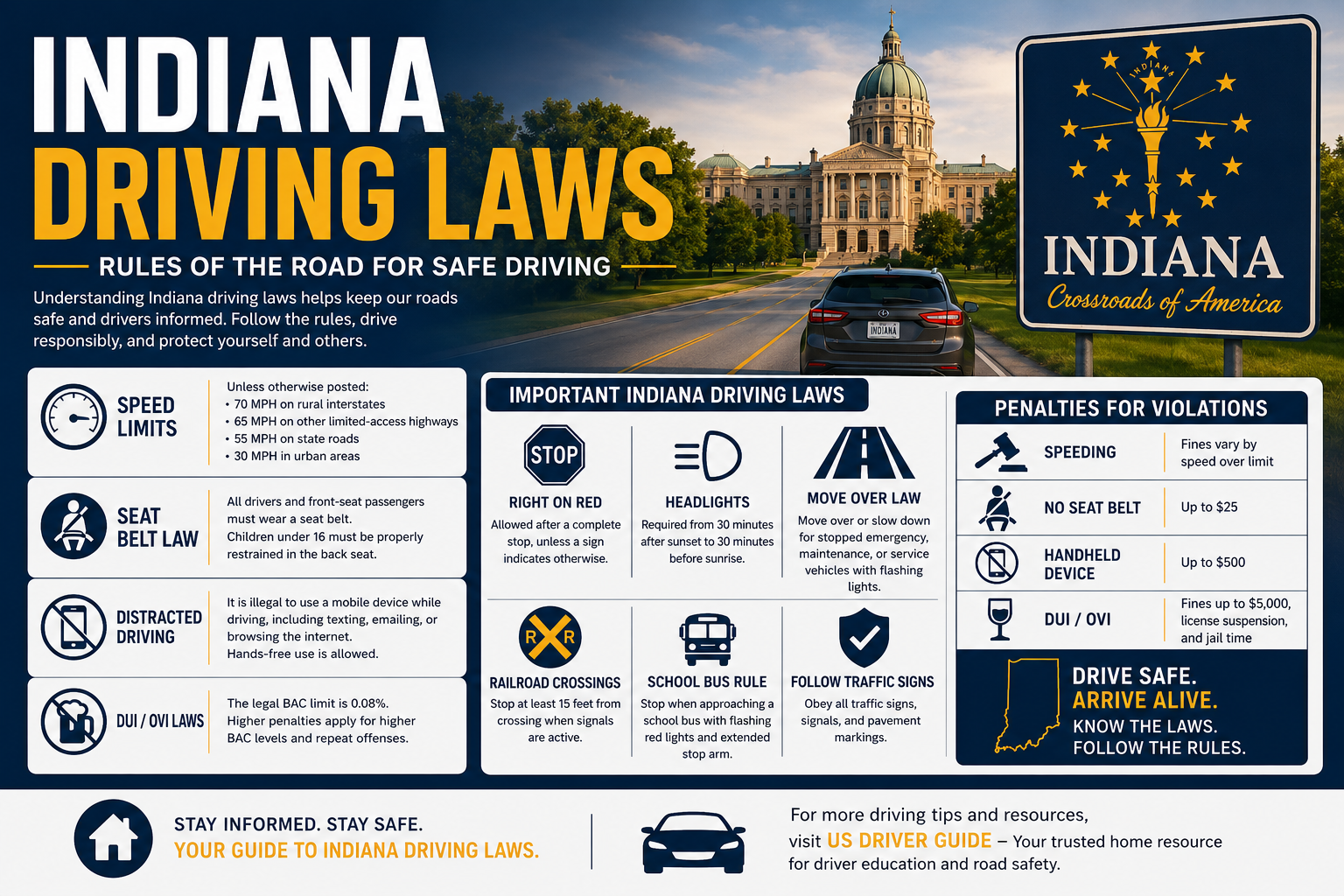
Understanding Indiana driving laws is crucial for maintaining road safety and avoiding costly fines or penalties. Whether you’re a new driver, a long-time resident, or someone moving to Indiana, knowing the state’s traffic regulations can help you drive confidently and responsibly. From speed limits and seat belt requirements to distracted driving and DUI laws, this guide covers the most important rules every Indiana driver should know.
Why Indiana Driving Laws Matter
Traffic laws are designed to protect drivers, passengers, cyclists, and pedestrians. Following Indiana driving laws helps reduce accidents, improve traffic flow, and create safer roadways for everyone.
Failing to comply with traffic regulations can result in:
- Traffic citations
- Fines and court costs
- Points on your driving record
- Increased insurance premiums
- License suspension in severe cases
Indiana Speed Limit Laws
Indiana has established speed limits for various road types.
Standard Speed Limits
Unless otherwise posted:
- 70 MPH on rural interstate highways
- 65 MPH on urban interstate highways
- 55 MPH on most state roads
- 30 MPH in many residential and urban areas
Drivers should always obey posted speed limits and adjust their speed based on weather, traffic, and road conditions.
Indiana Seat Belt Laws
Indiana requires drivers and passengers to wear seat belts.
Adult Seat Belt Requirements
All drivers and front-seat passengers must wear seat belts while the vehicle is in motion.
Child Passenger Safety Laws
Children must be properly secured using age-appropriate car seats, booster seats, or seat belts according to Indiana regulations.
Seat belts significantly reduce the risk of serious injuries during accidents.
Distracted Driving Laws in Indiana
Distracted driving is one of the leading causes of accidents across the country.
Handheld Device Restrictions
Indiana prohibits drivers from holding or using a mobile device while operating a vehicle, except in certain emergency situations.
Activities that can lead to distracted driving include:
- Texting
- Browsing social media
- Watching videos
- Entering navigation information while driving
Drivers should focus entirely on the road to ensure maximum safety.
Indiana DUI and OWI Laws
Indiana takes impaired driving offenses very seriously.
Legal Blood Alcohol Concentration (BAC) Limit
For most drivers, the legal BAC limit is:
- 0.08% for drivers age 21 and older
- Lower limits may apply to commercial drivers and drivers under 21
Penalties for DUI/OWI
Penalties may include:
- Significant fines
- License suspension
- Mandatory education programs
- Jail time for serious or repeat offenses
Never drive after consuming alcohol or drugs that impair your ability to operate a vehicle safely.
Move Over Law
Indiana’s Move Over Law requires drivers to:
- Change lanes when approaching stopped emergency vehicles if it is safe to do so.
- Slow down significantly when changing lanes is not possible.
This law helps protect police officers, firefighters, tow truck operators, and roadside workers.
School Bus Safety Laws
Drivers must stop when approaching a school bus displaying:
- Flashing red lights
- An extended stop arm
Failure to stop for a school bus can result in severe penalties and put children’s safety at risk.
Railroad Crossing Laws
When approaching railroad crossings, drivers should:
- Obey warning signals.
- Stop when required.
- Never attempt to cross when a train is approaching.
Ignoring railroad crossing signals can lead to serious accidents and legal consequences.
Right Turn on Red Rules
Indiana generally allows drivers to make a right turn at a red light after coming to a complete stop unless a sign specifically prohibits the turn.
Drivers must:
- Yield to pedestrians.
- Yield to oncoming traffic.
- Proceed only when safe.
Consequences of Violating Indiana Driving Laws
Breaking traffic laws may result in:
Fines
The amount depends on the specific violation and local court regulations.
Points on Your Driving Record
Accumulating too many points can lead to license suspension.
Increased Insurance Rates
Traffic violations often cause insurance premiums to increase.
License Suspension
Serious offenses or repeated violations may result in temporary or permanent suspension of driving privileges.
Safe Driving Tips for Indiana Drivers
To stay safe and avoid violations:
- Follow posted speed limits.
- Wear your seat belt at all times.
- Avoid distracted driving.
- Never drive under the influence.
- Maintain safe following distances.
- Stay alert during adverse weather conditions.
Developing safe habits can help prevent accidents and improve your overall driving experience.
Conclusion
Understanding Indiana driving laws is essential for every motorist who wants to stay safe and avoid costly penalties. By following speed limits, obeying seat belt requirements, avoiding distracted driving, and respecting all traffic regulations, drivers can contribute to safer roads throughout the state. Whether you’re learning from home or reviewing state regulations before getting behind the wheel, a trusted US Driver Guide can serve as a valuable home resource for understanding traffic laws, improving driving skills, and becoming a more responsible driver.
Frequently Asked Questions
Is texting while driving illegal in Indiana?
Yes. Indiana prohibits drivers from holding or using handheld mobile devices while driving, except for certain emergency situations.
What is the speed limit on Indiana interstate highways?
The speed limit can be up to 70 MPH on many rural interstate highways unless otherwise posted.
Do all passengers have to wear seat belts in Indiana?
Drivers and front-seat passengers are generally required to wear seat belts, and children must be properly restrained according to state law.
What is the legal BAC limit in Indiana?
For most adult drivers, the legal blood alcohol concentration limit is 0.08%.
What happens if I get too many points on my Indiana driving record?
Accumulating excessive points may result in license suspension and other penalties.