
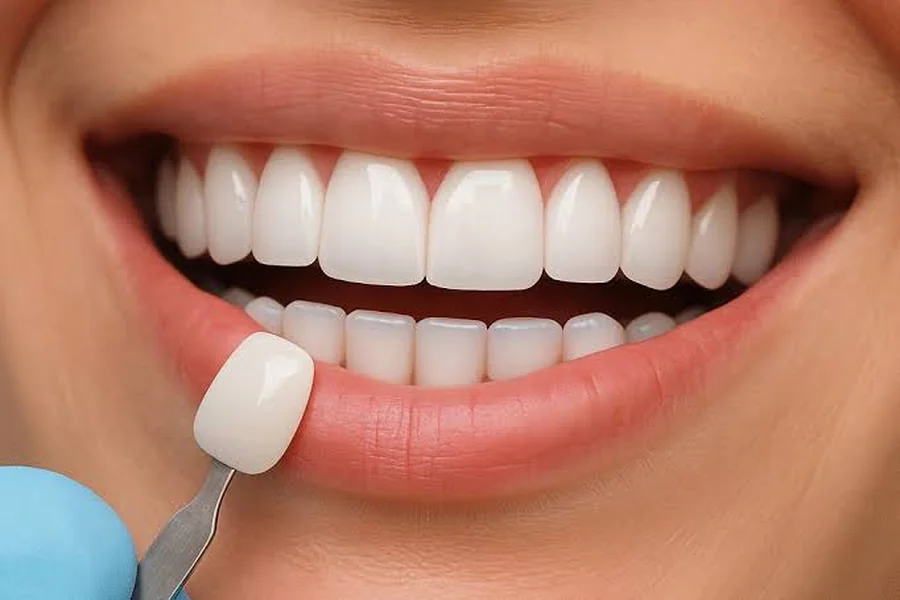
You may be staring at one tooth that looks darker than the rest, another with a chip, and a back tooth that has already had too many fillings. That is usually where the frustration starts, and Albany cosmetic dentistry can help. You want a smile that looks even and natural, but you also need teeth that can handle daily life without pain, cracks, or more repair a few months from now.
That is why so many treatment plans combine cosmetics with repair. Why crowns and veneers work best together in smile design comes down to one simple truth. Not every tooth needs the same kind of help. Veneers can refine shape, color, and symmetry on visible front teeth, while crowns can protect teeth that are weak, heavily filled, or broken. When both are used with care, the result looks more balanced and functions better, which is the whole point of good smile design.
Crowns and veneers solve different problems in cosmetic and restorative dentistry
People often assume veneers are the answer to every smile concern because they are known for creating a bright, polished look. Veneers do a lot, especially on front teeth with mild chips, small gaps, uneven edges, or stains that do not respond well to whitening. The University of Rochester explains that veneers are commonly used to improve the appearance of teeth, especially when the structure is still fairly sound.
That last part matters. Veneers cover the front surface of a tooth. They do not wrap around the whole tooth. If a tooth is already weak, fractured, or has a large filling, a veneer may improve the look but fail to give enough support. That is where crowns come in.
A crown covers the entire visible part of the tooth above the gumline. According to the University of Colorado School of Dental Medicine, dental crowns are used to restore damaged teeth and protect them from further breakdown. If you have a tooth that has had root canal treatment, severe wear, deep decay, or a crack, a crown is often the safer choice.
That difference is exactly why a mixed plan often works best. A smile is not made up of identical teeth with identical needs. One front tooth may only need a veneer for color correction, while the tooth next to it may need a crown because too much natural structure is gone. Trying to force the same treatment onto every tooth can lead to a smile that looks good in photos but does not hold up well in real life.
Using crowns and veneers together creates a more natural smile design
The best smile design is not about making every tooth look perfect in isolation. It is about getting all the teeth to work together. Shape, translucency, bite, gum line, and strength all have to match. If one tooth is heavily damaged and the surrounding teeth only need minor cosmetic changes, using a crown on the weak tooth and veneers on the others often creates the most conservative and natural result.
This is also where function matters as much as appearance. Modern esthetic dentistry is not just cosmetic. The University of Texas Health Science Center at San Antonio notes that esthetic dental treatment can restore both confidence and function. That is the part patients tend to feel after the numbing wears off and normal life starts again. You are not only looking better. You are biting, chewing, and speaking with more ease.
Combining veneers and crowns for smile design also helps your dentist preserve healthy tooth structure where possible. Teeth that need only surface improvement can often avoid full coverage. Teeth that need real reinforcement get it. That balance is smarter than overtreating every front tooth with crowns or undertreating damaged teeth with veneers alone.
The right choice depends on tooth strength, bite, and long term wear
If you grind your teeth, clench when stressed, or have an uneven bite, material choice becomes more than a style decision. A person with strong enamel and minor spacing issues may do very well with veneers. A person with old bonding, multiple fillings, and edge to edge wear may need crowns on some teeth just to avoid repeated breakage.
This is where cost concerns often creep in. You may wonder whether it is cheaper to just do veneers across the front and be done with it. Sometimes that saves money upfront and costs more later if one or two weak teeth fail. The reverse can happen too. Full crowns on healthy teeth can remove more structure than needed. Good planning in smile design with crowns and veneers is not about choosing the more expensive option. It is about choosing the right level of treatment for each tooth.
| Factor | Veneers | Crowns | Best Use Together |
|---|---|---|---|
| Coverage | Front surface only | Entire visible tooth | Lets healthy teeth stay more conservative while weak teeth get full support |
| Main purpose | Cosmetic improvement | Protection and restoration | Improves appearance without ignoring strength |
| Best for | Minor chips, discoloration, small gaps, uneven shape | Cracked teeth, large fillings, root canal treated teeth, heavy wear | Matches treatment to each tooth instead of using one method for all |
| Tooth reduction | Usually less | Usually more | Preserves structure where possible |
| Long term risk if misused | Can chip or fail on weak teeth | Can be too aggressive for otherwise healthy teeth | Reduces both risks through better planning |
Clear steps make cosmetic and restorative dentist visits more productive
- Ask which teeth need beauty and which need strength.
At your consultation, ask your cosmetic and restorative dentist to explain each tooth one by one. Which teeth are healthy enough for veneers, and which need crowns for support? That simple question often clears up confusion fast.
- Request a bite and wear evaluation before final treatment.
If you have clenching, grinding, old fractures, or uneven wear, those issues should shape the plan. A beautiful result that ignores bite forces may not last. You want a design that looks good when you smile and holds up when you chew.
- Review a mock up or preview of the final smile.
Photos, digital previews, or temporary restorations can help you see how crowns and veneers will blend together. This is especially helpful if only some front teeth need full coverage and others do not. The goal is a smile that does not look pieced together.
A balanced treatment plan protects your smile and your investment
You do not need every tooth treated the same way to get a beautiful result. You need a plan that respects what each tooth can handle. Veneers can create elegance and symmetry. Crowns can provide support where teeth are too damaged to rely on appearance alone. Used together, they often deliver the most stable and natural outcome.
If you are weighing options for a stronger, more even smile, schedule a consultation with a cosmetic and restorative dentist and ask for a plan built around both appearance and function. That is usually where confidence starts to feel real.