
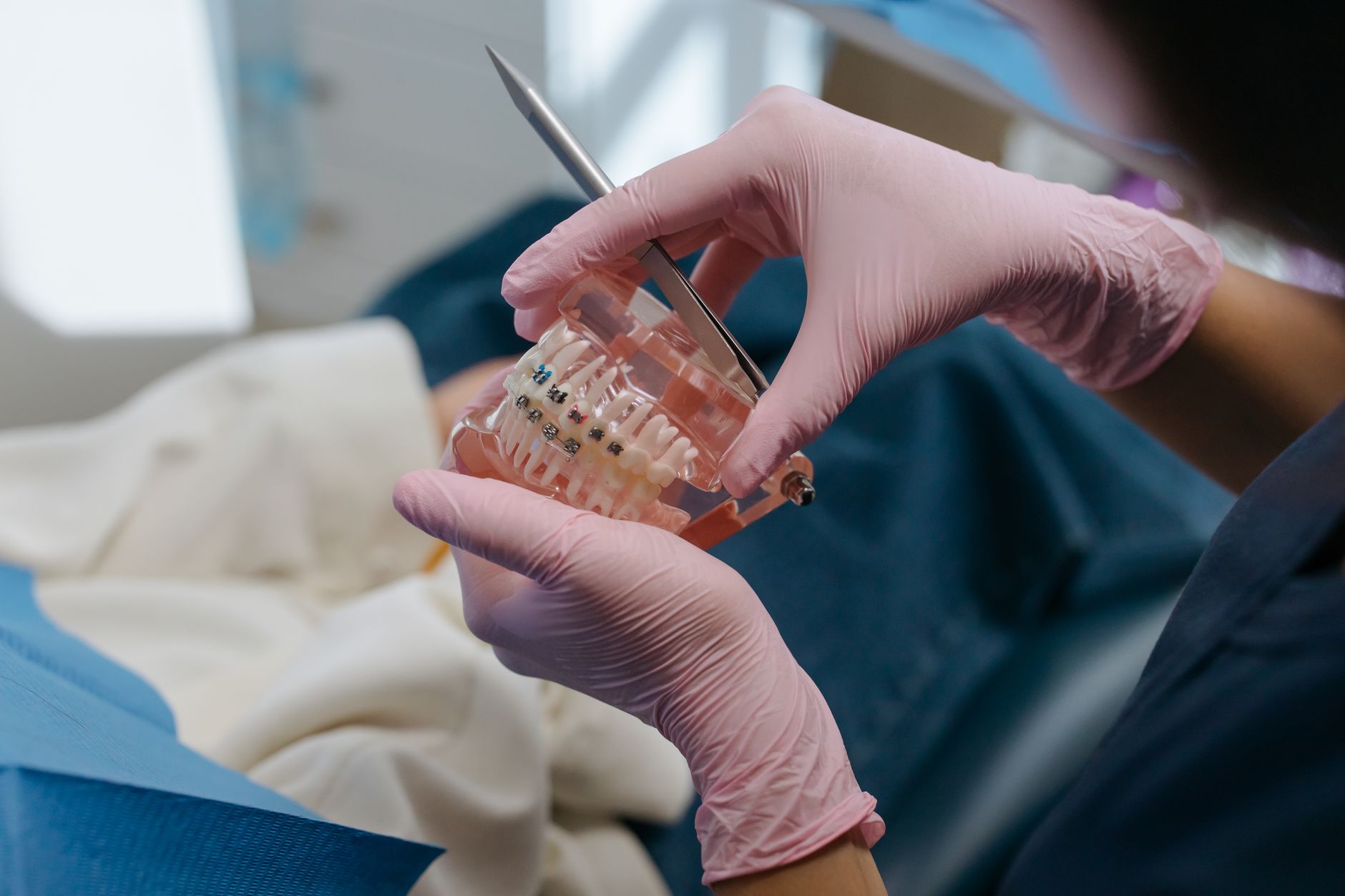
You might be feeling worn down in a way that coffee cannot touch. Maybe you wake up with headaches, your mouth feels dry, and your partner keeps telling you that you snore or even stop breathing for a moment at night. You try to laugh it off, but a part of you is worried. Something is not right, yet you are not sure where to start or who can help. An orthodontist in Whittier, CA may be able to evaluate your symptoms and offer treatment options.
Sleep apnea is scary because it hides in the dark. You do not see it the way you see a broken tooth or a swollen gum. You just feel the effects. The brain fog. The irritability. The sense that your body is running on low battery all day long. Because of this, it is easy to feel overwhelmed by the idea of tests, machines, and medical jargon.
Here is the short version. Sleep apnea is a medical condition that needs proper diagnosis. Orthodontic care can sometimes be part of the solution. Certain orthodontic treatments can gently change the shape and position of your jaws and teeth, which can help open your airway and support better breathing at night. Not everyone with sleep apnea needs orthodontics, and not every orthodontic treatment helps sleep apnea, but for the right person, it can be a meaningful piece of the puzzle.
So where does that leave you if you are tired, worried, and wondering if an orthodontist has anything to do with your sleep?
What is sleep apnea really doing to your body and daily life?
To understand how orthodontics can help, it helps to first understand what you are up against. Sleep apnea is more than loud snoring. It is a pattern where your breathing repeatedly stops or becomes very shallow while you sleep. According to resources from the National Heart, Lung, and Blood Institute, this can happen dozens of times per hour in some people, pulling your body out of deep, restful sleep again and again. You can read more about the medical side of sleep apnea from the National Heart, Lung, and Blood Institute.
When that happens, your oxygen levels drop. Your heart has to work harder. Your brain never quite relaxes. During the day, this can show up as trouble focusing, feeling unusually moody, or even drifting off during meetings or while driving. Over time, untreated sleep apnea has been linked to high blood pressure, heart disease, and other serious health problems. You can see a clear overview of symptoms and risks through MedlinePlus on sleep apnea.
If you recognize yourself in this, it is understandable to feel anxious. You might be thinking about the cost of treatment, the idea of wearing a mask at night, or the fear that nothing will really help. That uncertainty is heavy. You are not being dramatic. This is a big deal.
So how could your teeth and jaws possibly matter in all of this?
How can orthodontic treatment support better breathing during sleep?
For many people, sleep apnea is influenced by the shape and size of the airway. The airway is like a soft tunnel that runs behind your nose and mouth down to your lungs. If your jaws are too narrow or set too far back, that tunnel can be smaller than it should be. When you lie down and your muscles relax at night, the airway can collapse more easily.
This is where orthodontic treatment for sleep apnea may come in. Orthodontists do more than straighten teeth for a nice smile. They also guide how the upper and lower jaws grow and relate to each other, which can affect the space your tongue has and how open your airway is.
Some examples of how orthodontics can help include situations like these.
Imagine a child whose upper jaw is very narrow. They always breathe through their mouth, snore loudly, and struggle to focus in school. With the right diagnosis and a team approach, an orthodontist might use a palate expander to gently widen the upper jaw while the child is still growing. This can increase nasal airflow and help reduce mouth breathing and snoring over time.
Or think about an adult with a small lower jaw that sits far back. Their tongue has less room, so it tends to fall backward during sleep and block the airway. In that case, certain orthodontic approaches or jaw surgery combined with orthodontics might be considered to bring the jaws into a better position and create more airway space. Some adults may benefit from custom oral appliances made by dental or orthodontic professionals that guide the jaw and tongue into a more open position at night.
Of course, not every person with sleep apnea is a candidate for orthodontic help for obstructive sleep apnea, and not every orthodontic approach is backed by the same level of research. There is growing interest in this area. For example, research has explored how expanding the upper jaw or correcting jaw relationships can influence airway size in some patients. You can review one scientific discussion of oral appliance approaches and airway changes in a paper available through the National Library of Medicine.
Because of this mix of possibilities and limits, the real key is not to chase a single “magic” treatment, but to understand how orthodontics might fit into a larger plan created for you.
How does orthodontic care compare with other sleep apnea options?
You might be weighing several paths in your mind right now. Maybe you have heard about CPAP machines, surgery, mouthpieces, lifestyle changes, and now orthodontics. It can feel like standing at a crossroads without a map.
The truth is that sleep apnea care is often a combination of methods. CPAP remains a standard treatment for many people. Weight management, side sleeping, or avoiding alcohol at night can help in certain cases. In some situations, orthodontic or dental devices play a supporting role. To give you a clearer picture, here is a simple comparison of common approaches.
|
Treatment Option |
What It Does |
Pros |
Limitations |
|
CPAP (Continuous Positive Airway Pressure) |
Uses gentle air pressure through a mask to keep the airway open during sleep. |
Highly effective when used consistently. Works for many types of obstructive sleep apnea. |
Some people find the mask uncomfortable or noisy. Requires nightly use and ongoing maintenance. |
|
Oral Appliance / Orthodontic Device |
Positions the jaw and tongue to keep the airway more open. May include orthodontic changes to jaw width or position. |
Often smaller and quieter than CPAP. Can be helpful for mild to moderate cases or when CPAP is not tolerated. |
Not ideal for every patient. Results depend on anatomy and device type. Requires careful fitting and follow up. |
|
Jaw-focused Orthodontic Treatment |
Aims to change jaw alignment or width, often over months or years, to support airway space. |
Can address structural issues, especially in growing children. May improve both bite and airway. |
Longer treatment time. Not a stand alone cure for every case. Must be coordinated with medical care. |
|
Lifestyle and Medical Factors |
Weight management, sleep position, managing nasal congestion, avoiding sedatives or alcohol before bed. |
Low or no device use. Supports overall health. Can improve outcomes of other treatments. |
Often not enough on their own for moderate to severe sleep apnea. |
Looking at this, you can see that orthodontic treatment is usually one part of a broader strategy. It is not about choosing “braces or CPAP.” It is about asking where orthodontics might help your airway and comfort, especially if you struggle with standard options.
What should you actually do next if you suspect sleep apnea?
Knowing all of this is helpful, but it does not solve the nightly struggle by itself. You may still be wondering what to do tomorrow morning when you wake up tired again.
Here are three practical steps you can take that respect both your health and your peace of mind.
1. Start with a proper medical evaluation for sleep apnea
If you have not already done so, the first step is to talk to a primary care doctor or a sleep specialist. Describe your symptoms honestly. Mention snoring, gasping, morning headaches, daytime sleepiness, or any memory and focus problems. Your doctor may recommend a sleep study, either at a sleep center or sometimes at home.
A confirmed diagnosis matters. It helps you understand the type and severity of your sleep apnea. It also guides whether CPAP, an oral appliance, surgery, or a combination makes sense. Without this step, it is easy to spend time and money on treatments that are not right for you.
2. Ask whether an orthodontic perspective could be useful
Once you have a diagnosis, ask your medical provider whether your jaw structure, bite, or facial growth pattern might be contributing to your airway issues. If you already see an orthodontist, share your sleep concerns and any sleep study results with them. If you do not, you can look for an orthodontist who has experience working alongside sleep physicians or dentists who provide oral appliances.
During an orthodontic evaluation, expect a careful look at your bite, jaw position, and facial profile. Imaging such as X rays or 3D scans may be used to understand your airway space and jaw relationships. A thoughtful orthodontist will not promise that braces alone will “cure” sleep apnea. Instead, they will talk with you about whether orthodontic changes could support your medical treatment or improve your comfort.
3. Build a team and give yourself permission to adjust over time
Sleep apnea is not a one time fix. Your needs might change as you age, gain or lose weight, or complete orthodontic treatment. That is why creating a small team around you is so helpful. This might include a sleep physician, primary care doctor, dentist, and orthodontist. Each brings a different piece of the puzzle.
Stay honest about what you can tolerate. If CPAP is effective but uncomfortable, say so. If an oral device causes jaw soreness or tooth movement, speak up. Adjustments are normal. The goal is not perfection. It is steady progress toward better sleep, better energy, and a lower risk of long term health problems.
Moving forward with more clarity and less fear
Living with untreated or poorly treated sleep apnea can make every day feel heavier than it should. You may look fine on the outside, yet feel exhausted and frustrated on the inside. That gap between how you appear and how you feel can be lonely.
You are not imagining it. Poor sleep affects your mood, your relationships, and your ability to show up the way you want to. The encouraging part is that there are real, concrete options. Orthodontics is not a magic answer, but for the right person, it can be an important support for the airway and for long term health. When combined with medical care and lifestyle changes, orthodontic sleep apnea support can help you breathe a little easier at night and function more fully during the day.
You do not have to figure this out by yourself. Reach out to a trusted medical provider, ask the hard questions, and explore whether an orthodontic opinion belongs in your plan. With the right information and a team that listens, you can move from guessing and worrying to making informed, steady choices about your sleep and your health.