
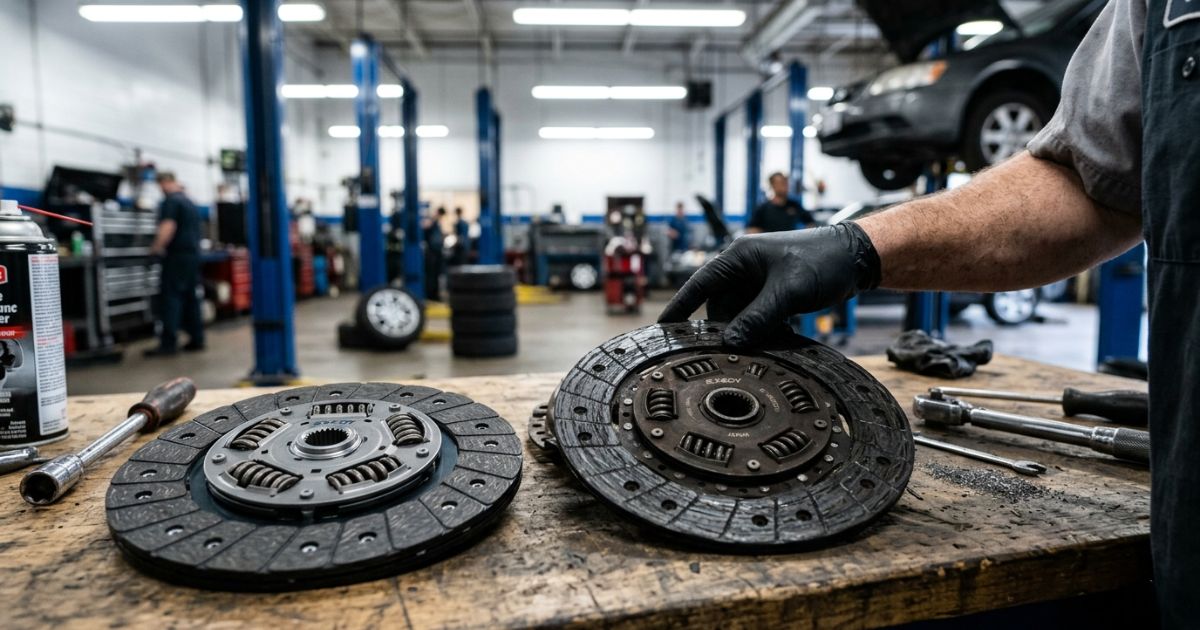
Clutch and gearbox repair is one of those mechanical necessities that most drivers only think about after something goes wrong, usually at the worst possible moment, like merging onto a highway or pulling away from a busy intersection.
Your clutch and gearbox work as a matched pair, transferring engine power to your wheels smoothly and efficiently. When either component starts to fail, your car will almost always send you signals.
Some are subtle, like a slightly spongy pedal feel. Others are impossible to ignore, such as grinding gears or a burning smell filling the cabin.
Learning to recognize these early warning symptoms is the difference between a relatively affordable fix and a catastrophic transmission failure that leaves you stranded.
If you notice any of the signs described in this guide, the smartest move is to search for your nearest car mechanic shop immediately because waiting almost always makes the problem worse and the repair bill larger.
This expert guide walks you through every major symptom of clutch and gearbox trouble, explains the underlying mechanical causes, and gives you a clear action plan so you can speak knowledgeably with a transmission specialist.
Why Early Clutch and Gearbox Repair Saves You Money and Keeps You Safe
Before diving into specific symptoms, it helps to understand why timing matters so much with clutch and gearbox repair. Unlike an oil change or tire rotation, transmission problems tend to snowball.
A worn clutch disc, for example, sheds friction material that can contaminate the flywheel and pressure plate. Low transmission fluid causes gears to run hot, which hardens seals and leads to leaks, which then cause even lower fluid levels. Within a few hundred miles, a minor issue can become a full rebuild.
From a safety standpoint, a failing clutch or gearbox can cause sudden loss of power, unexpected gear slippage, or an inability to accelerate out of danger. That is why professional mechanics urge drivers to act on early symptoms rather than adopting a “wait and see” approach.
Top Signs Your Clutch Needs Professional Attention
Your clutch is a wear-and-tear component. In normal driving, a clutch can last anywhere from 50,000 to 100,000 miles, but driving habits, traffic conditions, and vehicle type all affect lifespan. Here are the most reliable warning signs that your clutch is failing.
Clutch Pedal Feels Spongy, Stiff, or Sticks to the Floor
The clutch pedal should offer consistent, linear resistance. If it feels spongy or sinks to the floor with little pushback, you likely have a hydraulic problem.
Most manual cars use a master cylinder and slave cylinder filled with brake fluid to engage and disengage the clutch. Air in the system, a leaking seal, or a failing cylinder will cause that soft pedal sensation.
Conversely, a pedal that feels unusually stiff or hard to press down may indicate a failing clutch cable (in older cars) or a worn pressure plate. Either way, clutch and gearbox repair becomes urgent when pedal feel changes noticeably.
Engine Revs Rise but Speed Doesn’t (Clutch Slippage)
This is the classic slipping clutch symptom. You press the accelerator, the tachometer needle jumps up quickly, but your car accelerates slowly or not at all.
Slippage happens when the clutch disc no longer grips the flywheel tightly enough. The friction material has worn thin, or oil contamination from a rear main seal leak has reduced grip.
Driving with a slipping clutch generates intense heat, which can warp the flywheel and damage the pressure plate. What might have been a simple clutch disc replacement can turn into a full clutch kit replacement including the flywheel easily doubling the repair cost.
Grinding or Chirping Noises When Pressing the Clutch Pedal
Noises are your car’s way of crying for help. A grinding sound when you press the clutch pedal often points to a failing throw-out bearing (also called the release bearing).
This bearing disengages the clutch when you push the pedal. When it wears out, it makes a grinding or rumbling sound that changes with pedal pressure.
A chirping or squealing noise, especially when the engine is cold, may indicate a worn pilot bearing or bushing where the transmission input shaft meets the engine crankshaft.
Neither bearing is expensive on its own, but both require removing the transmission to replace making labor the main cost. Pairing bearing replacement with a proactive clutch change saves money in the long run.
Clutch Pedal Vibrates or Pulsates Under Your Foot
If you feel a vibration, pulsing, or chattering through the clutch pedal when engaging first gear from a stop, your flywheel may have developed hot spots or become warped.
Uneven clutch disc wear or a damaged pressure plate can also cause this sensation. Vibrations put extra stress on the transmission input shaft and differential, so prompt diagnosis matters.
Clear Indicators Your Gearbox Is Failing
Gearbox problems can be more varied than clutch issues because automatic and manual transmissions fail in different ways. Below, symptoms are separated by transmission type where helpful, with general warning signs covered first.
Difficulty Shifting Gears in a Manual Transmission
A manual gearbox should shift with a satisfying, mechanical precision. If you encounter resistance, a grinding feel, or need to force the shifter into position, something is wrong. Common causes include:
- Worn synchronizers – These brass rings match gear speeds before engagement. When they wear, you hear grinding.
- Low or contaminated manual transmission fluid – Unlike engine oil, gearbox fluid is often ignored. Old fluid loses its friction modifiers.
- Bent shift forks – Usually from aggressive or rushed shifting.
- Clutch drag – The clutch doesn’t fully disengage, so gears keep spinning.
In any of these cases, continued driving accelerates internal damage. What might start as a crunchy 2nd gear can become a locked-up transmission.
Automatic Transmission Hesitates, Slams, or Refuses to Shift
Modern automatic transmissions are sophisticated hydraulic computers. When working correctly, gear changes are nearly imperceptible.
Warning signs in an automatic include:
- Delayed engagement – You shift from Park to Drive, and there is a 2–3 second pause before the car moves.
- Harsh or slamming shifts – The transmission suddenly bangs into gear.
- Refusal to upshift – The engine revs high while the transmission stays in a low gear.
- Limp mode activation – The transmission locks into 2nd or 3rd gear to prevent further damage. Your check engine light will likely come on.
These symptoms often trace back to low transmission fluid, a clogged filter, faulty solenoids, or a failing valve body. A professional scan tool can read transmission-specific trouble codes (P0700 through P0899) to pinpoint the issue.
Unusual Noises That Change with Gear Selection
Gearboxes are inherently noisy, but certain sounds are diagnostic gold. Use this quick reference:
| Sound | Likely Cause |
| Whining that increases with speed | Worn gearbox bearings or low fluid |
| Clunking when shifting into reverse or drive | Worn engine or transmission mounts |
| Rumbling in neutral that stops when clutch is pressed | Input shaft bearing failure |
| Howling on deceleration | Worn differential bearings or gear damage |
| Clicking while turning (FWD cars) | CV joint failure, not gearbox—but often misdiagnosed |
Pay attention to whether the noise changes when you press the clutch (in manuals) or when the car is in gear versus neutral. That information is gold to a mechanic.
Fluid Leaks Under the Car – Color Matters
Transmission fluid leaks are unambiguous signs that clutch and gearbox repair is needed. The fluid color tells you what you are dealing with:
- Bright red – Fresh automatic transmission fluid (ATF). Leak likely from a pan gasket, cooler line, or seal.
- Brown or dark red – Older ATF that has been overheated. The leak may be small, but the fluid condition suggests internal wear.
- Black with burnt smell – Severely degraded fluid. The transmission has been running hot for a while.
- Clear or amber oily fluid – Manual transmission fluid or gear oil. Leaks often come from axle seals or the gearbox housing.
For manual cars, a leak around the bell housing (where engine meets transmission) could be engine oil or gear oil. A mechanic might need to add UV dye to trace the source.
Secondary Symptoms That Point to Clutch or Gearbox Trouble
Some warning signs are less direct but still worth investigating. Do not ignore these just because they seem minor.
Burning Smell – Especially After Heavy Traffic or Hill Starts
A distinct burning odor similar to hot brakes or burnt paper often means your clutch is overheating. Repeated slipping, riding the clutch pedal, or towing heavy loads can generate enough heat to glaze the clutch disc or even crack the flywheel.
If you smell burning and notice any pedal or shifting issues, pull over safely and let the car cool down. Then drive directly to a mechanic.
Poor Fuel Economy That Appears Suddenly
Your transmission directly affects engine load and RPM. A slipping clutch wastes engine power as heat instead of motion. A sticking valve in an automatic transmission can cause the torque converter to stay unlocked, keeping RPMs higher than necessary.
If your gas mileage drops by 15–20% without changes in driving habits or tire pressure, have your clutch and gearbox inspected.
Shaking, Jerking, or Vibration During Acceleration
While shaking can come from wheel balance or brake issues, a distinct shudder during gear engagement points to the transmission. In manuals, a warped flywheel or uneven clutch disc causes juddering when pulling away from a stop.
In automatics, contaminated fluid or a failing torque converter can produce a similar sensation. A transmission specialist can road-test your car and pinpoint the source.
Check Engine Light or Transmission Warning Light
Many drivers assume the check engine light only covers engine problems. In reality, modern powertrain control modules (PCMs) monitor transmission operation too.
A gearbox fault can trigger the same dashboard light. If your car has a dedicated transmission temperature or warning light, treat it as urgent. Do not clear the code without diagnosis and you will erase valuable data.
How to Confirm If You Need Clutch and Gearbox Repair
Suspicion is not the same as diagnosis. Here is a step-by-step process you can follow before calling a mechanic.
Perform a Simple Clutch Test (Manual Cars)
On a level, empty road with no traffic behind you:
- Pull the parking brake firmly.
- Start the engine and let it idle.
- Shift into 3rd gear (not 1st).
- Slowly release the clutch pedal without pressing the gas.
A healthy clutch should stall the engine immediately. If the engine continues running or the car tries to move forward without stalling, your clutch is slipping badly and needs replacement.
Check Transmission Fluid Level and Condition
For automatic cars:
- Warm up the engine, park on level ground, and cycle through each gear before checking.
- Pull the transmission dipstick (if equipped—some newer cars have sealed transmissions).
- Fluid should be pinkish-red, not brown, black, or gritty.
For manual cars:
- Checking fluid often requires lifting the car and removing a fill plug.
- Use a clean wire or small tool to feel for fluid just below the fill hole.
- Low fluid should be topped up with the correct viscosity (often 75W-90 GL-4).
Use an OBD-II Scanner to Read Transmission Codes
A basic OBD-II scanner costs $20–50 and can read generic powertrain codes. Codes beginning with P0700 indicate transmission control system issues.
Higher-end scanners read manufacturer-specific codes that pinpoint failed solenoids, speed sensors, or pressure switches. If you see transmission-related codes, book a professional diagnosis.
What to Expect During Professional Clutch and Gearbox Repair
Knowing the repair process helps you avoid being upsold or misdiagnosed.
Clutch Replacement Process
A standard clutch replacement includes:
- Removing the transmission from the vehicle (2–4 hours of labor)
- Inspecting and resurfacing or replacing the flywheel
- Replacing the clutch disc, pressure plate, and throw-out bearing
- Replacing the pilot bearing or bushing
- Inspecting the rear main engine seal for leaks
- Flushing hydraulic fluid (if master/slave cylinders are original)
Cost typically ranges from $800 to $1,500 for most front-wheel-drive cars. Performance or all-wheel-drive vehicles can cost $2,000+.
Gearbox Repair Options
Gearbox repair falls into three tiers:
- Fluid and filter service – $150–300. Solves many automatic shifting issues.
- Valve body or solenoid replacement – $500–1,000. Addresses specific shift problems.
- Full transmission rebuild or replacement – $1,500–4,000. Needed for catastrophic internal damage.
A reputable shop will always start with the least invasive fix and road-test before recommending a rebuild.
How to Extend Clutch and Gearbox Life After Repair
Once you have invested in clutch and gearbox repair, protect that investment with these habits:
- Do not rest your foot on the clutch pedal – Even light pressure causes partial disengagement and wear.
- Come to complete stops before shifting into reverse – The reverse gear is usually unsynchronized and easily damaged.
- Service transmission fluid every 30,000–60,000 miles – Check your owner’s manual. Sealed transmissions still need fluid changes despite manufacturer claims.
- Avoid using the clutch to hold on hills – Use the parking brake instead.
- Allow automatic transmissions to warm up briefly – Cold fluid does not flow well.
Final Thoughts
No driver wants to hear that their clutch or gearbox needs major work. But ignoring early warning signs almost guarantees a more expensive and more dangerous failure.
If you experience any of the symptoms in this guide slipping clutch, grinding noises, shifting difficulty, fluid leaks, burning smells, or dashboard warnings do not wait for the problem to fix itself. It will not.
A professional mechanic can often diagnose the issue in under an hour with a road test, fluid inspection, and code scan. In many cases, early intervention turns a potential $3,000 transmission replacement into a $200 fluid service or a $900 clutch job. More importantly, it keeps you and your passengers safe on the road.
Take fifteen minutes this week to pay attention to how your car feels. Listen for unusual sounds. Check your transmission fluid if you know how.
And if something feels wrong, trust your instinct. Your clutch and gearbox are talking to you, make sure you are listening before they go silent for good.