
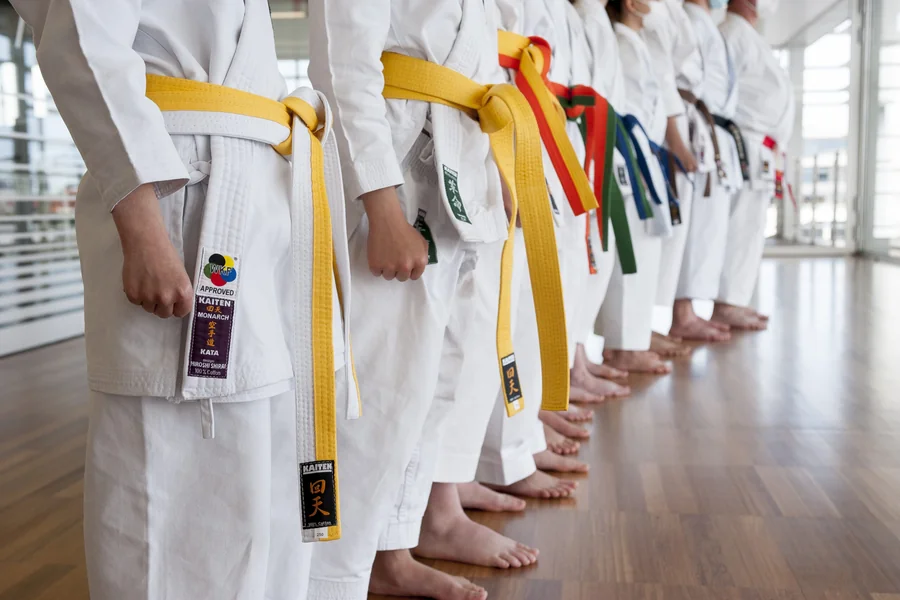
Every belt tells a story, and each color marks a step in that story. Martial arts belt colors are more than just cloth-they reflect growth and commitment. From white to black, each one holds meaning and purpose.
Students wear them with pride, knowing the color shows progress. These belts honor hard work and time spent training.
Keep reading this article to learn more about the meaning behind martial arts belt colors.
White Belt: The Beginning of Discipline and Awareness
The white belt is the first step into martial arts training. It symbolizes purity, a blank slate, and the start of a lifelong journey. Students at this level are eager, curious, and ready to learn.
Wearing a karate white belt shows that a student has taken the first leap into structured training. The focus is on building respect, learning posture, and developing focus. Discipline starts here, laying the groundwork for every future rank.
White also represents potential-the idea that growth is possible through effort. It marks the beginning of discipline both in mind and body.
Yellow Belt: Awakening Knowledge and Basic Understanding
The yellow belt shows the first signs of light and knowledge breaking through. Students begin to understand the structure of martial arts and start to grasp basic skills. They are no longer just beginners-they are learners with direction.
At this level, awareness grows with every movement. The body and mind begin to connect in new ways. Students gain confidence in routines and start applying their training with purpose.
Yellow signals a mental shift from just copying to truly understanding. Practice becomes more meaningful as focus sharpens.
Orange Belt: Building Confidence Through Practice
The orange belt symbolizes a stronger fire within the student. Movements become sharper, and confidence shows in their actions. There is a noticeable difference in how they carry themselves.
Students learn how to adapt techniques and respond to new challenges. Their posture improves, and so does their timing. Orange shows that the student is growing not just in skill but also in trust in their ability.
Progress becomes visible with the orange belt. It highlights a deeper connection to the discipline and structure of martial arts.
Green Belt: Developing Strength and Consistency
The green belt represents new strength, growth, and consistency in training. It shows that the student is rooted in the art and continues to grow upward. Physical strength and control begin to stand out more.
At this stage, students repeat techniques with better flow. They understand the importance of rhythm and balance in every move. Their mental discipline becomes as strong as their physical effort.
Green symbolizes progress and development in both skill and attitude. The student no longer looks for approval-they now focus on improving with purpose.
Blue Belt: Expanding Skills and Mental Focus
The blue belt marks a time when training reaches a higher level of mental focus. Students begin to show calmness and control even under pressure. They think ahead, plan their movements, and adapt quickly.
This level teaches students to apply strategies, not just motions. Skills become more refined, and patterns are practiced with purpose. Students start to see the full picture of martial arts.
Blue represents depth, like a wide-open sky filled with new opportunities. The mind expands as much as the body does.
Purple Belt: Deepening Technique and Inner Control
The purple belt symbolizes transformation. Students now have strong technical skills and have begun refining their inner control. Every move has meaning and thought behind it.
This level brings more responsibility and self-discipline. Students may start helping others, showing leadership qualities through their actions. Their technique becomes more polished, showing the results of long practice.
Purple reflects the balance between physical power and mental calm. Students begin to show mastery of timing and intent.
Brown Belt: Mastering Fundamentals and Showing Readiness
The brown belt shows that a student is close to reaching expert levels. Their fundamentals are solid, and their movements are both smooth and powerful. They are now seen as role models in the training space.
At this level, students are expected to maintain consistency and demonstrate deep knowledge. They often guide lower belts while continuing to refine their skills. Respect becomes a major part of their presence.
Brown represents readiness and maturity. It shows that the student has trained with purpose and is nearing mastery.
Red Belt: Honoring Responsibility and Leadership Growth
The red belt stands for responsibility and leadership. Students at this level have strong control over their skills and mindset. They lead by example and help build the culture of their dojo or studio.
This belt is a symbol of strength and the will to protect, not just perform. Students take part in advanced training and are often respected by peers and instructors. They hold knowledge and are expected to use it wisely.
Red marks a serious phase in martial arts. It’s no longer just about progress-it’s about giving back.
Black Belt: Symbol of Mastery, Dedication, and Lifelong Learning
The black belt is the most recognized symbol in martial arts. It reflects years of dedication, mental strength, and consistent effort. Reaching this level means the student has gone far, but the journey continues.
A black belt doesn’t mark an end but a new beginning. It shows that the student has learned enough to now teach and grow further. The skills gained are used for lifelong learning and contribution.
This rank honors both skill and humility. It shows that mastery is a process, not a final point.
Belt Colors Across Disciplines: Unique Traditions and Shared Values
Different martial arts systems may use different belt orders and colors. Still, each style uses them to show growth, discipline, and dedication. The meaning behind each color honors skill and cultural tradition.
From the first karate white belt to the final step before black, each rank tells a story. Belt colors mark progress and teach values like respect and patience. They help guide students through their journey.
Uniforms add purpose to training. Wearing this student karate uniform made from durable lightweight cotton supports movement. It also helps students feel proud of the rank they’ve earned.
Why Martial Arts Belt Colors Still Matter Today
Martial arts belt colors reflect a student’s growth in skill, discipline, and respect. Each color carries meaning and shows how far a student has come.
Learning the meaning behind martial arts belt colors helps you understand more than just rank. Stay committed and let each belt mark your progress with pride.
Did this article help you? Browse our blog for more interesting topics.