
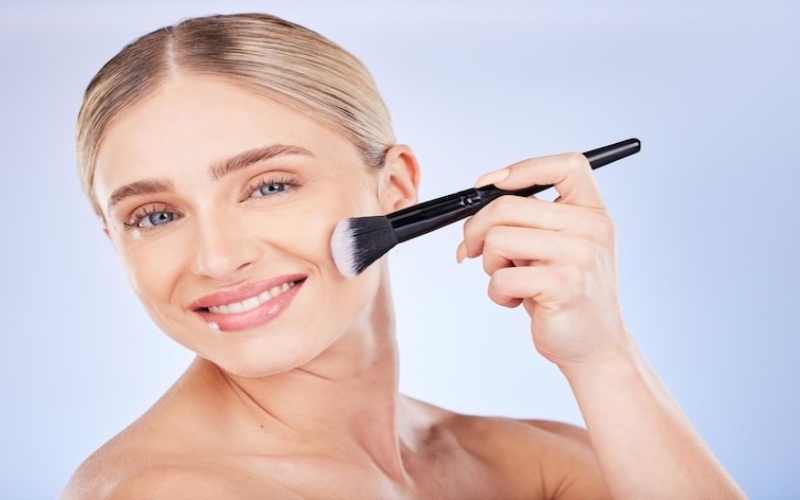
Choosing the right powder brush can make a big difference in your makeup routine. A good powder brush helps create a smooth, even finish that looks natural and flawless.
The best powder brush for a natural application has soft, fluffy bristles that are densely packed to pick up and distribute powder evenly.
When shopping for a powder brush, look for one with a large, rounded head. This shape allows you to easily sweep powder across your face in broad strokes.
Natural bristles work well for powder products, while synthetic bristles are better for liquid or cream formulas. The handle should feel comfortable in your hand and allow easy control as you apply your makeup.
To use your powder brush, dip it into loose or pressed powder and tap off the excess.
Gently sweep the brush across your face in circular motions, focusing on areas that tend to get shiny. Build up coverage slowly for a natural look. Clean your brush regularly to keep it in good condition and prevent bacteria buildup.
Key Takeaways
- Choose a brush with soft, dense bristles for even powder application.
- Use circular motions to apply powder for a natural finish.
- Clean your powder brush often to maintain its performance.
Understanding Powder Brushes
Powder brushes are key tools for evenly applying loose and pressed powders. They come in different types, bristle materials, and shapes to suit various needs and preferences.
Types of Powder Brushes
Powder brushes include large fluffy brushes, kabuki brushes, and fan brushes. Large fluffy brushes are great for all-over powder application. Kabuki brushes have short, dense bristles for buffing powder into the skin. Fan brushes work well for a light dusting of powder or highlighter.
Each type serves a specific purpose. Large fluffy brushes give sheer, even coverage. Kabuki brushes provide more concentrated application. Fan brushes offer precise powder placement.
Bristle Types
Powder brushes use either natural or synthetic bristles. Natural bristles are made from animal hair like goat or squirrel hair. They’re soft and pick up powder well. Synthetic bristles are man-made fibers that work for both powder and liquid products.
Natural bristles blend powders smoothly but can be pricey. Synthetic bristles are more affordable and easier to clean. Both types can make good-quality brushes for powder application.
Brush Shapes and Sizes
Powder brush shapes range from round to angled to flat. Round brushes work well for overall application. Angled brushes better fit face contours. Flat brushes press powder into the skin for more coverage.
Size matters, too. Larger brushes cover a larger area quickly, while smaller brushes offer more control. Medium-sized brushes balance speed and precision.
Pick a shape and size that fits your face and application style. Test different options to find what works best for you.
Techniques for Application
Proper application techniques are key to achieving a flawless look with powder foundation. The right methods help you get even coverage and a natural finish.
Achieving an Even Foundation
Start with clean, moisturized skin. Dip your powder brush into the product and tap off excess.
Apply the powder in gentle, circular motions across your face. Focus on the t-zone first, then work outwards. Build coverage slowly, adding thin layers as needed. For fuller coverage, lightly mist your brush with setting spray before dipping it in the powder.
Use a smaller brush or sponge for hard-to-reach areas like around the nose and eyes. Pat and press the product into these spots instead of sweeping.
Setting and Blending
After applying foundation, use a large, fluffy brush to set your makeup with translucent powder.
Sweep the brush lightly over your face in downward strokes. This helps lock in your base and reduce shine.
For a seamless finish, blend the edges of your powder application with a clean brush. Use soft, circular motions to buff out harsh lines or visible powder.
To refresh your makeup during the day, carry a small powder puff. Press it onto oily areas to absorb excess shine without disturbing your base.
Contouring and Highlighting
For contouring, use a small, angled brush. Apply a matte powder one or two shades darker than your skin tone.
Focus on the hollows of your cheeks, temples, and jawline. Blend well to avoid harsh lines.
When highlighting, use a fan brush or a small tapered brush. Apply shimmery powder to the high points of your face: cheekbones, bridge of the nose, and center of the forehead.
Use a light hand and build slowly for a natural glow.
Blend contour and highlight shades into your base makeup for a seamless look. Use circular motions with a clean, fluffy brush to soften harsh edges.