
Designing interiors that can truly withstand the rhythm of everyday life demands a deep understanding of materials. In busy homes and commercial environments, surfaces are exposed to constant friction, moisture, temperature changes, and impact. That’s why design professionals think beyond appearance, selecting materials based on performance metrics like hardness, porosity, and resistance ratings. The best materials create spaces that perform beautifully for years to come.
Quartz
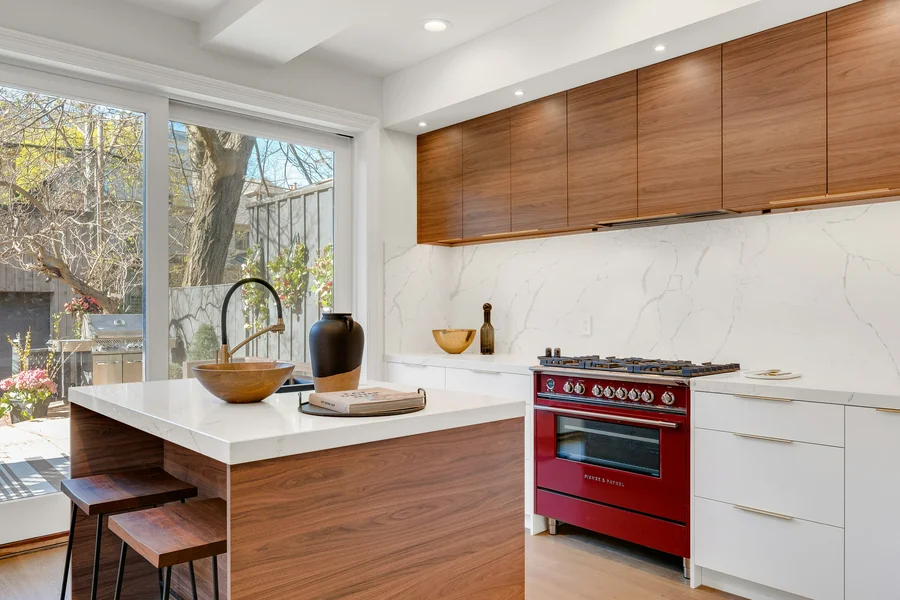
Quartz has become a cornerstone in high-performance design, largely due to its engineered composition. Made from roughly 90–95% crushed natural quartz combined with polymer resins, this material achieves a level of durability that rivals, and often surpasses, many natural stones. On the Mohs hardness scale, quartz typically ranks around 7, making it highly resistant to scratches from everyday use.
Its non-porous structure is another major advantage, with a water absorption rate close to zero. This makes quartz inherently resistant to staining and bacterial growth, which is why it’s often specified for kitchens, bathrooms, and even healthcare environments. Unlike granite or marble, it doesn’t require periodic sealing, and its UV-resistant variants can even be used in sun-exposed commercial interiors without fading. For designers, it offers the rare combination of technical reliability and visual consistency.
Porcelain
Porcelain tile is prized for its exceptional density and low porosity, achieved through high-temperature firing processes that exceed 1200°C. This results in a material with a water absorption rate of less than 0.5%, making it highly resistant to moisture, frost, and staining. Its hardness also allows it to withstand heavy foot traffic without chipping or cracking, which is why it’s frequently used in airports, hotels, and retail spaces.
Beyond durability, porcelain excels in versatility. Advanced digital printing technology allows it to replicate the look of marble, wood, or concrete with remarkable precision, while maintaining superior technical performance. Many porcelain tiles are also rated for slip resistance using the R-scale (often R9 to R11 for interiors), making them suitable for wet areas like bathrooms and entryways.
Concrete
Concrete is one of the most robust and adaptable materials in contemporary interiors. Its compressive strength typically ranges between 20 and 40 MPa for residential applications, but can go significantly higher in commercial settings. When sealed with modern polyurethane or epoxy coatings, concrete becomes highly resistant to abrasion, chemicals, and moisture infiltration.
Thermal mass is another technical advantage worth noting. Concrete can absorb and slowly release heat, helping regulate indoor temperatures and improve energy efficiency. While it may develop hairline cracks over time, these are often considered part of its natural character rather than a flaw. In high-traffic environments, its ability to endure heavy loads and continuous use makes it a favorite among designers seeking both durability and a minimalist aesthetic.
Natural Stone
Natural stone remains a timeless choice, but professionals approach it with a more technical mindset. Harder stones like granite, which ranks between 6 and 7 on the Mohs scale, offer strong resistance to scratches and heat, making them suitable for countertops and flooring in high-use areas. Slate, another durable option, has a naturally cleft surface that provides slip resistance, ideal for both indoor and outdoor applications.
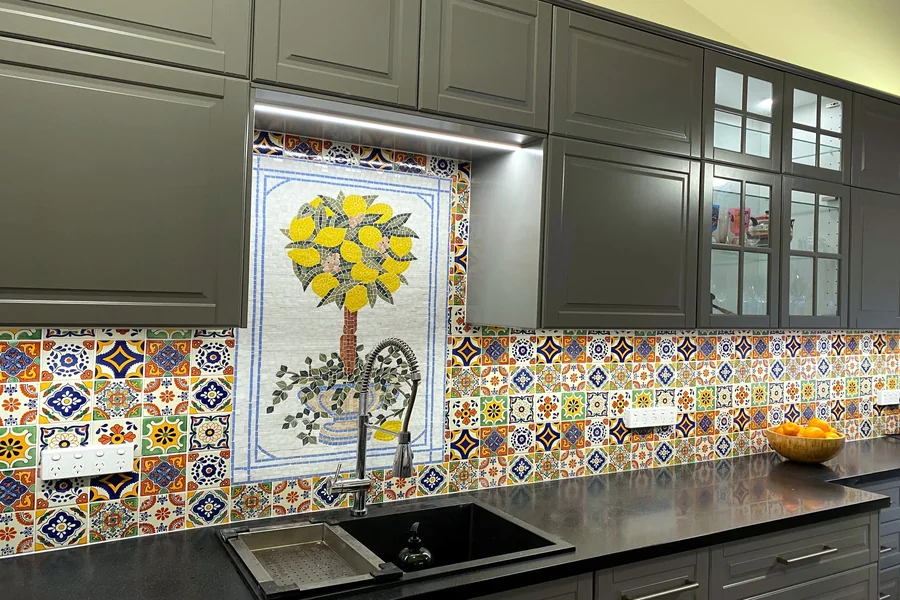
For decorative features, natural stone mosaics provide a balance of durability and intricate design. Because they are composed of smaller pieces, they can better accommodate structural movement and reduce the likelihood of cracking. When properly sealed, they also resist moisture and staining, making them a practical choice for backsplashes, showers, and accent mosaic walls.
Performance Fabrics
Performance fabrics are engineered specifically to withstand wear, and their technical specifications reflect that. Many are tested using the Martindale or Wyzenbeek abrasion tests, often exceeding 50,000 double rubs: a benchmark that indicates suitability for heavy commercial use. These fabrics are typically treated with stain-resistant finishes or woven with solution-dyed fibers, which means the color penetrates the entire fiber rather than just the surface.
This construction makes them highly resistant to fading from UV exposure as well as spills from wine, coffee, or oils. Some advanced options even incorporate antimicrobial properties, making them ideal for hospitality and healthcare settings. Despite their technical strength, today’s performance textiles are designed to mimic the softness and texture of natural fibers, allowing designers to maintain a sense of comfort without compromising on durability.
Stainless Steel
Stainless steel is synonymous with durability, particularly in demanding environments like professional kitchens. Most interior applications use grades such as 304 or 316 stainless steel, both of which offer excellent resistance to corrosion and heat. Grade 316, in particular, includes molybdenum, enhancing its resistance to chlorides and making it suitable for more humid or chemically exposed settings.
Its non-porous surface prevents bacterial absorption, making it one of the most hygienic materials available. It can withstand high temperatures without warping and resists most forms of staining, although it may show fingerprints or minor scratches over time.