
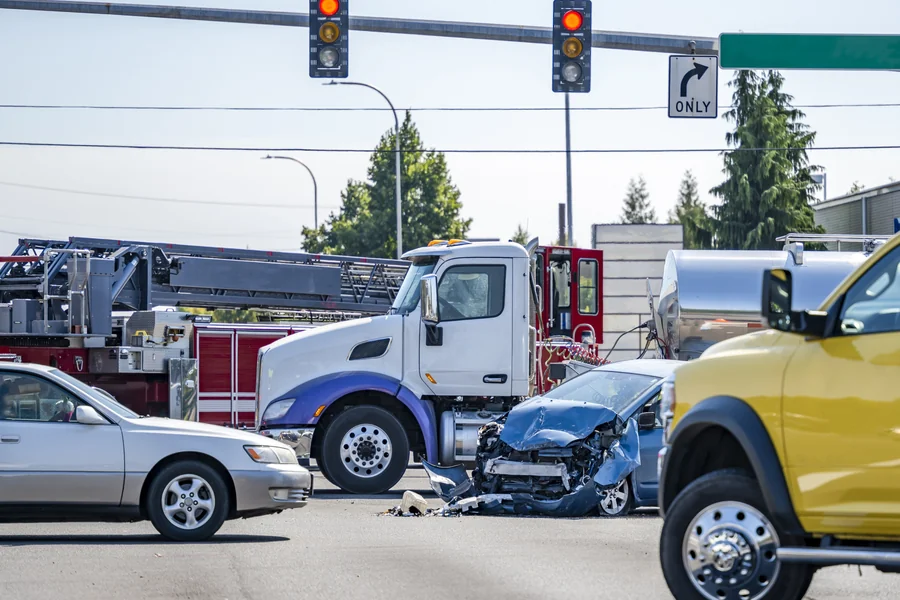
A truck crash shatters more than metal. It can wreck your health, strain your family, and crush your sense of control. Early investigation is the only way to protect your rights before key proof disappears. Skid marks fade. Dash camera footage gets erased. Witnesses move or forget. Trucking companies move fast to limit their risk. You must move faster. Quick action can uncover driver logs, maintenance records, phone use, and cargo details. These records can show fatigue, poor training, or unsafe loads. They can also link the crash to company choices, not just one driver. When you act early, you give investigators time to visit the scene, speak with witnesses, and secure video. That step can shape every decision that follows. It can also help with complex truck collision cases where more than one company shares blame.
Why time works against you after a truck crash
After a crash, proof does not wait for you. It changes or disappears fast. Each day that passes can weaken your claim and your path to recovery.
Key proof that can fade or vanish includes:
- Skid marks and debris on the road
- Tire tracks on gravel or dirt
- Broken parts that get thrown away
- Nearby security or traffic camera footage
- Truck dash camera footage that is erased or recorded over
Memories also change. Witnesses forget small but important details. Stress distorts what you recall. Early interviews lock in what people saw and heard before fear or confusion creeps in.
What early investigators look for
Truck crashes often involve many layers of proof. Quick investigation helps capture each piece before it slips away.
Common proof includes:
- Scene proof such as photos, videos, skid marks, road signs, and weather
- Truck proof such as damage, load condition, and any mechanical failure
- Driver proof such as logbooks, trip sheets, and medical cards
- Electronic data such as event data recorders and GPS records
- Company records such as training files and hiring documents
The Federal Motor Carrier Safety Administration explains how truck crash reports and records help show patterns of unsafe behavior. You can read more about federal crash data at the FMCSA Large Truck and Bus Crash Facts page.
How federal rules shape truck crash proof
Federal rules control how long trucking companies must keep certain records. Some are kept for months. Some for years. Some can be deleted in days unless someone demands that they stay.
Here is a simple guide to common record types and how long they might last under federal rules or company practice. These are general time frames. Exact rules can differ.
| Type of record | Why it matters | Typical risk if you wait
|
|---|---|---|
| Driver hours of service logs | Show fatigue and rule breaks | May be overwritten after a few months |
| Electronic logging device data | Tracks driving time and rest | Can reset or delete with new trips |
| Dash camera and in cab video | Shows driver actions before impact | Often erased on a set schedule |
| Truck maintenance records | Show poor repair or skipped checks | Can be purged under company policy |
| Cargo and weight records | Reveal overloads or shifting freight | Often kept only for short periods |
| Employment and training files | Show hiring and training choices | Can be altered or culled over time |
The Federal Motor Carrier Safety Regulations set many of these record duties. You can review key safety rules at the FMCSA Regulations page.
Why early action protects your health and your claim
After a truck crash, your first step is medical care. The next step is to protect proof. Both matter. Both support each other.
Early medical care:
- Documents your injuries when they happen
- Connects your pain to the crash
- Rules out hidden harm such as head or spine damage
At the same time, early investigation:
- Supports the cause of the crash
- Shows who is responsible
- Builds a clear story that links the crash to your injuries
When both tracks move together, you stand on stronger ground. Doctors explain what happened to your body. Investigators explain what happened on the road.
How fast an investigator should move
You do not need every detail on day one. You do need someone to start the process.
Strong early steps include:
- Preserving the truck and its parts
- Sending written notice to keep logs and electronic data
- Requesting police reports and 911 recordings
- Photographing the scene from many angles
- Contacting witnesses before they scatter
These steps stop routine company habits from erasing proof. They also stop slow drift in witness memory.
Why truck crashes are different from car crashes
Truck crashes often involve more than two drivers. They can involve:
- The driver
- The trucking company
- The company that owns the trailer
- The shipper that loaded the freight
- The repair shop that worked on the truck
Each one may hold a piece of the blame. Each one may hold proof you need. Early investigation connects these parts. It tracks who owned what, who hired whom, and who made each choice that led to the crash.
Steps you can take today
You may feel numb, angry, or scared. That reaction is human. You still have power. You can act in simple ways that protect your future.
Start with three steps:
- Get full medical care and keep every record and bill
- Store all crash photos, messages, and contact details in one safe place
- Reach out for help with early investigation so proof does not slip away
Early investigation does not erase what happened. It does something else. It gives you a clear path through a hard time. It protects your voice when others try to speak for you. It turns scattered facts into a story that shows what you endured and what you need to rebuild your life.