
Key Takeaways
- Hearing loss affects millions worldwide and can impact communication, social engagement, and overall quality of life.
- Sensorineural, conductive, and mixed hearing loss are the primary types, each requiring distinct management approaches.
- Common causes include aging, noise exposure, genetics, infections, ototoxic medications, and physical trauma.
- Early detection and intervention significantly improve outcomes, especially for children and those at risk of progressive loss.
- Advances in hearing technology, cochlear implants, and emerging therapies, such as gene therapy, offer promising treatment options.
- Regular consultation with hearing care professionals ensures personalized strategies and effective management.
Introduction
Hearing loss, affecting millions worldwide, is a condition that can significantly impact communication, social interactions, and overall quality of life. Understanding the distinctions between different types of hearing loss, their underlying causes, and the latest advances in management is crucial for those affected, as well as their loved ones. For individuals seeking support and solutions, personalized Sudbury audiology services offers comprehensive assessments and tailored care to address all hearing needs.
Whether hearing loss is gradual or sudden, being informed about potential causes and available treatments empowers people to take proactive steps toward addressing the condition. From everyday noise to inherited conditions, a multitude of factors may influence auditory health and function.
Primary Types of Hearing Loss
Sensorineural Hearing Loss
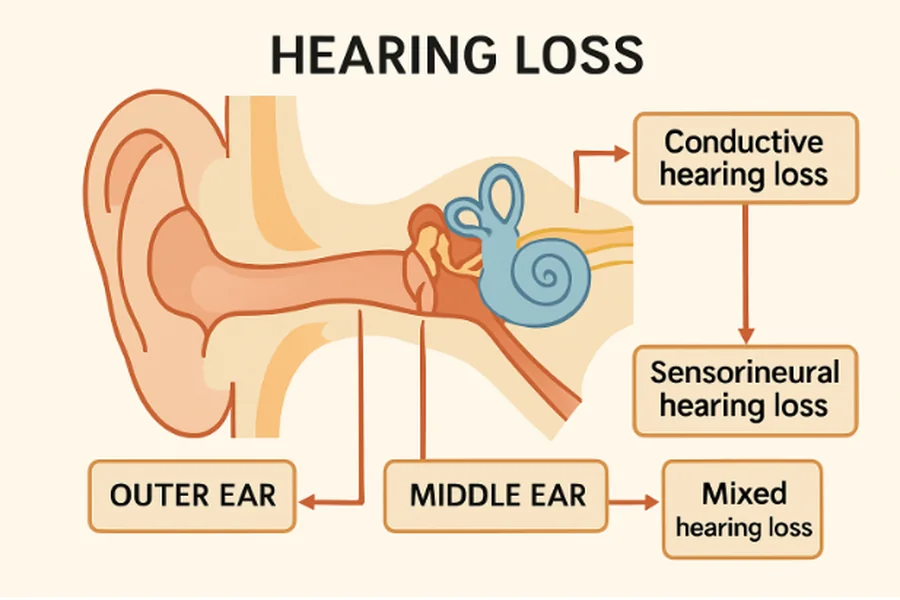
Sensorineural hearing loss is the most common form of permanent hearing impairment, resulting from damage to either the inner ear’s sensory hair cells or the auditory nerve pathways. This damage diminishes the ear’s ability to convert sound waves into electrical signals, which are then interpreted by the brain. Aging, also known as presbycusis, and prolonged exposure to loud environments—such as construction sites or concerts—are among the primary culprits. Infections, certain medications, and genetic factors can also play a significant role. While sensorineural hearing loss is typically irreversible, many people benefit from technologies such as hearing aids or cochlear implants to improve sound perception and speech comprehension.
Conductive Hearing Loss
Conductive hearing loss occurs when the transmission of sound through the outer or middle ear is blocked or reduced before reaching the inner ear. Common causes include persistent ear infections, fluid accumulation (especially in children), impacted earwax, or structural abnormalities like a perforated eardrum or malformation of the ear canal. Unlike sensorineural loss, many conductive cases can be resolved medically or surgically, leading to the restoration of hearing. Early detection and intervention are vital, particularly for children, as untreated ear issues can impact language development and academic performance.
Mixed Hearing Loss
Mixed hearing loss combines elements of both sensorineural and conductive impairments, affecting multiple parts of the auditory system. A person with mixed loss might have both damaged inner ear structures as well as a blockage or abnormality within the outer or middle ear. Treatment strategies often require a collaborative, customized approach—addressing the visible physical barriers and providing amplification solutions for the irreversible components. Ongoing consultation with hearing care professionals enables more effective management of complex cases.
Common Causes of Hearing Loss
- Aging (Presbycusis): Hearing capacity typically declines with age due to changes in the inner ear or auditory nerve. This natural process, known as presbycusis, makes it increasingly difficult to follow conversations, especially in noisy environments.
- Noise Exposure: Consistently loud environments or sudden, intense noises can damage the delicate hair cells in the cochlea, leading to permanent (noise-induced) hearing loss. Protective strategies, such as wearing earplugs at concerts or in occupational settings, are essential for prevention.
- Genetic Factors: Many hereditary syndromes, such as Usher syndrome, can cause congenital hearing loss. Even without a family history, gene mutations may increase susceptibility to auditory decline.
- Infections: Childhood diseases such as measles, mumps, or meningitis can damage the auditory system, resulting in temporary or permanent hearing loss.
- Ototoxic Medications: Certain medications, including some antibiotics and chemotherapy drugs, can harm inner ear structures. Individuals at risk should consult their healthcare provider and weigh the risks and benefits of treatment options.
- Physical Trauma: Accidents resulting in head or ear injuries can disrupt the structures responsible for sound transmission, leading to either temporary or permanent loss of hearing.
Recent Advances in Hearing Loss Treatment
In recent years, scientific breakthroughs have held promise for individuals with severe or hereditary hearing loss. One notable advancement is the development of gene therapy techniques that target the genetic mutations causing congenital deafness. Preliminary research has illustrated success in restoring some auditory function for children with hereditary forms of hearing loss, highlighting a new chapter in audiological medicine. While gene therapy is not yet widely available, innovations in cochlear implants and more advanced, discreet hearing aids continue to enhance the quality of life and communication abilities for people of all ages.
Ongoing research initiatives explore regenerative medicine, neuroprotective medications, and even stem cell approaches to restore lost hearing or prevent further degeneration. The pace of innovation is accelerating, giving hope to those affected and their families.
Final Thoughts
Early identification and understanding of the various types of hearing loss and their causes enable more effective interventions and better outcomes. Thanks to new treatment modalities, prevention strategies, and developments in assistive technologies, managing hearing loss is more promising than ever. Staying informed and seeking professional guidance are essential first steps toward maintaining optimal hearing health for a lifetime.