
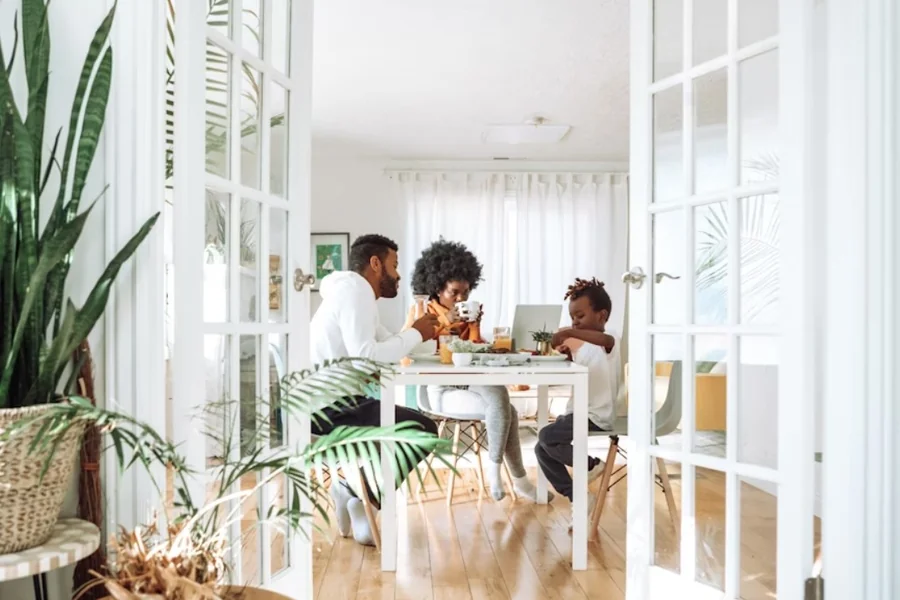
We’ve heard our folks reminisce about the good ol’ days. They’d regale us with stories of being squeezed into a tiny home with their siblings and fighting over who got first dibs on the top bunk.
Call it childhood trauma or selective memory. What they omitted was living in a house that groaned under the weight of a large family. From leaking roofs to limited bathroom time, if those walls could talk, they’d say, “I need more space!”
Now that you’re older and able to create memories of your own, having a home that grows as you do is part of your journey. It should be more than four walls and a roof. Your home should be a space that evolves with you.
Designing or choosing a home that can grow with your changing needs is one of the smartest decisions you’ll ever make.
Start With Flexibility in Mind
One of the best ways to ensure your home grows with you is to prioritize flexible spaces from the beginning.
Think beyond today’s needs, and rather what your life might look like in five, 10, or even 20 years.
Style Curator hits the nail on the head when suggesting the trick is creating multipurpose rooms.
That guest room? It might be a nursery, home office, or fitness space one day. Open-plan living areas can easily be sectioned off with sliding doors or furniture if more privacy is needed later on.
When selecting furniture for these adaptable spaces, consider timeless pieces that complement multiple styles and uses. For example, incorporating mid century furniture can bring both elegance and functionality to a room. Its clean lines and versatile design make it easy to transition a space from a home office to a guest room or from a lounge area to a nursery, all while maintaining visual appeal.
Quick Tips:
- Add extra power outlets and lighting in unused corners.
- Choose neutral finishes so rooms are easy to repurpose.
- Keep floor plans open, but not too open.
Build Smart, Not Big
It’s tempting to think that more square footage equals more future-proofing. However, that’s not always the case.
A smart layout is far more valuable than a few extra, unused rooms. Focus on functionality over size.
A well-placed mudroom or storage area might bring more day-to-day satisfaction than a formal dining room that rarely gets used.
Also, don’t forget energy efficiency. A growing family or aging homeowner will appreciate a home that’s kind to both the environment and your utility bill.
Plan for Life Stages
Life moves fast. One minute you’re decorating a nursery, the next you’re wondering if the stairs are safe for Grandma.
CO-Architecture emphasizes the importance of age-in-place design. These are features that support mobility, accessibility, and safety over time. They include:
- Wide doorways
- No-step entries
- Ground-floor primary suites
- Lever-style door handles instead of knobs
Even if you don’t need these features now, having the infrastructure in place means you won’t have to gut your house down the road.
Make Remodeling Easy
As your family grows, space always falls short. Let us take the example of a thriving location like Lenoir City in Tennessee. According to recent data, the population here is 12,834 in 2025. That’s a whopping 26% more than 10,134 as reported in 2020. Clearly, the town has families that are getting bigger.
Growing families need more room for less money. And that’s why new home construction in Lenoir City, TN, is booming, according to city officials.
Residents in the East Tennessee enclave favor adaptable layouts over upsizing. That’s why working with builders who understand long-term living is crucial.
Preferred Construction advises hiring a local remodeling service that appreciates the neighborhood’s unique architectural style.
When building, consider how easily your home can handle:
- Room additions
- Garage conversions
- Outdoor living expansions (hello, future screened-in porch!)
Think Location and Longevity
Your home doesn’t exist in a vacuum. If your community doesn’t grow with you, your house might not either.
It’s worth choosing a location with long-term potential, such as good schools, healthcare, green spaces, and strong infrastructure.
Areas like Lenoir City are getting attention for being affordable, scenic, and rapidly growing. According to Stacker, many small towns in the state are experiencing a surge in home values and development.
The Political Push
Even government officials are calling for more sustainable and adaptive housing.
At the 2024 UKREiiF property conference, Britain’s Deputy Prime Minister Angela Rayner made it clear. We need homes designed for life, not just for immediate sale.
Meanwhile, Moosomin, Saskatchewan, is investing in community-based housing projects that attract families looking for affordable, long-term homes for sale.
It’s a global trend and one that savvy homeowners should pay attention to.
Build It Once, Live in It Always
Whether you’re building from scratch or house-hunting for “the one,” the goal remains the same. Find or create a home that works today and tomorrow.
Ask yourself:
- Can this space shift with my lifestyle?
- Will it be safe and accessible as I age?
- Is there room to remodel or adapt if needed?
Designing for longevity doesn’t mean sacrificing style or personality. It means you’re building smarter. A house that expands with you is a good investment and peace of mind.