
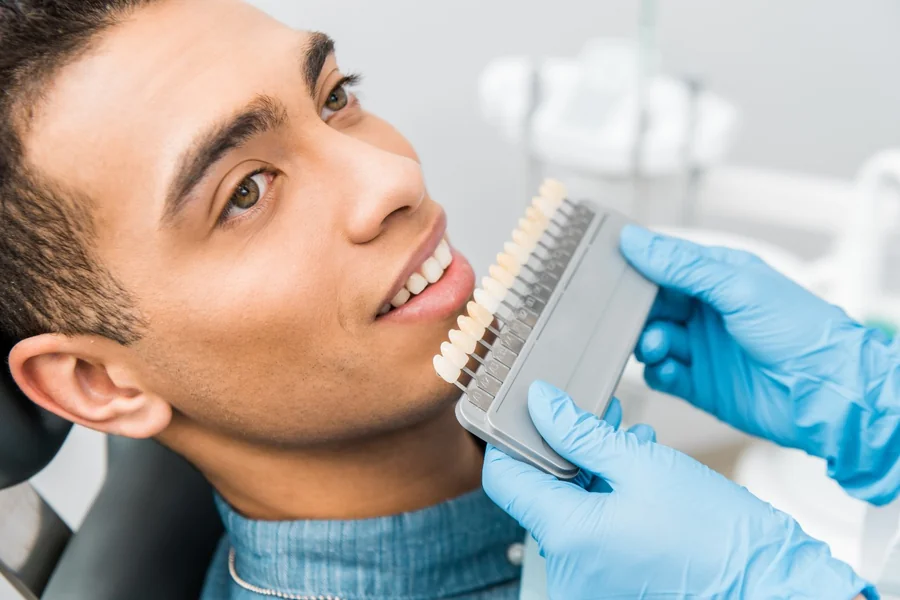
You might be feeling stuck between wanting a confident smile and worrying about choosing the wrong treatment. Maybe you are hiding your teeth in photos, or you have a missing tooth that makes you second-guess every time you laugh or eat in public. At the same time, you have heard about dental implants, veneers, crowns, and whitening, and it all starts to blur together. A consultation with a cosmetic dentist Boston can help you understand your options and choose the right path forward.end
Because of this confusion, it is easy to freeze and do nothing. You are not alone in that. Many people wait years, living with pain or embarrassment, simply because they are afraid of making a costly mistake.
The good news is that you do not need to become a dental expert. You just need to ask smart questions. When you walk into an appointment with an implant and cosmetic dentist, and you know what to ask, you take back a sense of control. The five questions below will help you understand your options, weigh risks and benefits, and decide what is truly right for you, not just what sounds impressive or looks good on a brochure.
So, where does that leave you right now? You may still be anxious, but by the end, you will have a short list of clear questions that can guide every conversation about implant and cosmetic dental options.
Question 1: “What are all my realistic options, and what happens if I do nothing?”
Most people ask what the dentist recommends, then stop there. The problem is that you only hear one path. You miss the chance to compare simpler or more affordable choices, and you never fully understand the cost of waiting.
Imagine you have one missing tooth in the back. The dentist suggests a dental implant. That might be a strong option, but you also deserve to hear about a bridge, a partial denture, or even the choice to delay treatment for a period of time. You also deserve to know how each path affects the teeth around the space, your bite, and your long-term comfort.
A helpful way to phrase it is: “If we look at the next 5 to 10 years, what are all the options, and what does my mouth probably look like if I do nothing at all?” This opens the door to a much more honest conversation about risk and timing.
For dental implants, you can also ask for neutral information from outside sources. For example, the U.S. Food and Drug Administration explains benefits, risks, and long-term expectations in its guide on what you should know about dental implants. Reading this on your own can help you spot which questions matter most in your case.
Question 2: “How will this choice affect my other teeth, my bite, and my face over time?”
It is easy to focus on the one tooth that bothers you in the mirror. Cosmetic dentistry can whiten or reshape that tooth, and a dental implant can replace a missing one, but your mouth works as a system. When one part changes, others often adjust around it.
What does that look like in real life? If you choose to leave a gap, the teeth next to that space may tilt, and the tooth above or below may start to drop into it. If you choose a crown that is too big or a veneer that changes your bite, you might get jaw tension or headaches. If you replace several teeth with implants but do not plan the bite carefully, some implants can carry more force than they should, which may shorten their life.
A strong implant and cosmetic dentist should be able to show you how each option affects your chewing, speech, and facial support. You can ask things like, “Will this change how my upper and lower teeth meet. Will it change the shape of my lips or the way my face is supported as I age?” The answer does not need to be perfect, but it should show that they are thinking about your whole mouth, not just one tooth.
Question 3: “What are the long-term risks, maintenance, and replacement costs?”
When you are unhappy with your smile, it is tempting to focus on the quick fix and ignore what happens years from now. This is where people often feel regret. A choice that is cheaper today may cost more in the long run, and some “permanent” options still need repair or replacement over time.
For example, crowns and bridges are strong and can look very natural. They also require the dentist to shape the teeth they cover, and they may need to be replaced after some years. You can review general expectations from sources like the University of Illinois Chicago’s overview of crowns and bridges. This can help you understand what to expect before you commit.
Dental implants have their own pattern. The implant in the bone is meant to last a long time, but the crown on top can chip or wear and may need replacement. Gums and bone can change with age, which might affect appearance or comfort. Teeth whitening fades. Veneers can chip. Each option has a “life cycle.”
So ask clearly. “How long does this usually last in someone like me. What might need repair? What is the usual cost of that repair, and how often does it come up?” This question protects you from surprises and helps you compare options more fairly.
Question 4: “How much experience do you have with cases like mine, and can I see similar results?”
You are not being rude when you ask about experience. You are protecting your health and your money. An implant and cosmetic dentist may be very skilled, but not every dentist has the same training or the same number of cases under their belt.
You might say, “How many implants do you place in a typical month. Have you done many full front tooth cosmetic cases? Can you show me before and after photos from patients who had similar problems to mine?” You are not just looking for perfect, polished photos. You are looking for consistency and for results that look natural, not fake or identical.
This is also the moment to ask who is actually doing each part of the work. Some offices work with specialists or surgeons for the implant placement and with lab technicians for the cosmetic design. That can be a strength, as long as everyone is communicating well. You can ask, “Who plans the case. Who places the implant? Who designs and makes the final teeth, and how do you all coordinate?”
Question 5: “What will my day-to-day life be like during and after treatment?”
It is easy to talk about procedures in abstract terms. It is harder and more honest to talk about how you will feel when you are trying to work, eat, talk, or sleep during treatment.
With dental implants, you might have a period of healing after the implant is placed, then a wait while the bone bonds to the implant, then another visit for the final crown. During that time, you might have a temporary tooth or a removable option. With cosmetic work like veneers or crowns, there may be a stage where you wear temporary versions while the lab makes the final ones.
Ask direct questions. “Will I be able to chew on that side. How long will I be numb? Will I need time off work? Will I have a temporary that looks reasonable in photos? If something hurts or breaks, who do I call, and how quickly can I be seen?” These answers matter more to your daily peace of mind than many technical details.
Comparing common dental implant and cosmetic options: what should you weigh?
Once you start asking these smart questions, it helps to see the main options side by side. This simple table is not a diagnosis, but it can guide your thinking when you talk with your dentist about cosmetic and implant dentistry choices.
| Treatment | Typical Purpose | Effect on Nearby Teeth | Longevity (general range) | Key Things To Ask About |
|---|---|---|---|---|
| Single Dental Implant | Replace one missing tooth with a fixed option | Usually leaves neighbors untouched | Implant may last many years. Crown may need replacement over time | Surgical risks, healing time, bone quality, long-term maintenance |
| Dental Bridge | Fill a gap by anchoring to teeth on each side | Support teeth are reshaped and carry extra load | Often 7 to 10 years or more with good care | Impact on anchor teeth, cleaning under bridge, future replacement |
| Crown (Single Tooth) | Strengthen or improve the shape and color of a damaged tooth | Affects only that tooth | Often 10 to 15 years with good care | Tooth preparation, material choice, risk of root canal later |
| Veneers | Improve color, shape, and alignment appearance of front teeth | Tooth surface is reshaped or thinned | Often 10 to 15 years, may chip or detach | Amount of tooth removed, stain resistance, repair options |
| Whitening | Lighten natural tooth color | No structural change, but can cause temporary sensitivity | Months to years, depends on habits | Sensitivity, maintenance, realistic shade goals |
This kind of comparison can help you ask better follow-up questions. For example, if you are choosing between a bridge and an implant, you now know to ask how each affects the support teeth, how easy it will be to clean, and what the replacement cycle might look like.
Three steps you can take right now to feel more in control
- Write down your priorities before any appointment
Take five minutes and list what matters most to you. It might be long-term durability, appearance in photos, avoiding surgery, staying within a certain budget, or minimizing time off work. Bring this list to your appointment and say, “Here is what matters most to me. Can we talk through options with these in mind?” This keeps the discussion centered on your life, not just on teeth.
- Bring these five questions in writing and take notes
Print or write the five questions and place a space under each one. During your consultation, actually read them out loud and jot down short answers. You do not need every technical word spelled correctly. Just capture the main points. This simple habit makes it easier to compare opinions if you see more than one dentist, and it helps you feel less overwhelmed once you get home.
- Look up one neutral resource for each option you are considering
After your visit, spend a few minutes with trustworthy sources. For implants, the FDA’s page on dental implants and what you should know is a helpful starting point. For crowns and bridges, the overview from the University of Illinois Chicago on crowns and bridges offers simple explanations. Use these to confirm that what you heard in the office matches what you read, and to spark any follow-up questions.
Moving forward with more confidence
You might still feel nervous about choosing between a dental implant, a bridge, veneers, or whitening. That is normal. What matters is that you now have a simple way to guide the conversation. When you ask these five smart questions, you shift from feeling talked at to feeling talked with. You give your dentist a clear picture of your fears and your hopes, and you give yourself room to say “yes” or “not yet” with confidence.
Your smile is personal. It carries your stories, your laughter, and your daily comfort. You deserve care that respects that. Use these questions as your starting point, and keep asking until the path in front of you feels clear and honest.